TMS for PTSD: Does Protocol Actually Matter? - Dr. Noah Philip
TMS for PTSD: Does Protocol Actually Matter? | Dr. Noah Philip | The Neurostimulation Podcast
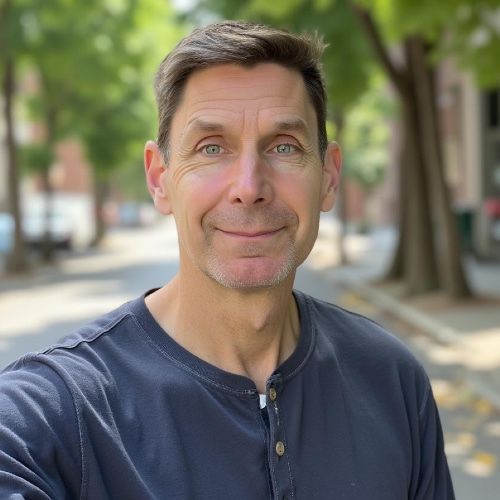
In this episode of the Neurostimulation Podcast, Dr. Michael Passmore sits down with Dr. Noah Philip — Professor of Psychiatry at Brown University, Section Chief of Psychiatric Neuromodulation at the VA Providence, and leader at the VA Center for Neurorestoration and Neurotechnology — to explore the cutting edge of brain stimulation for PTSD, depression, and beyond. Dr. Philip shares findings from a landmark multi-site VA study comparing three TMS approaches for PTSD, and what the results mean for clinicians worldwide. He also discusses accelerated TMS, the combination of tDCS with virtual reality exposure therapy, teaching TMS in Ukraine, and the exciting frontier of focused ultrasound as a noninvasive form of deep brain stimulation.
In this episode:
🧠 What Dr. Philip's lab at the VA Center for Neurorestoration and Neurotechnology does
📊 Key findings from a propensity-matched cohort study of 756+ veterans comparing 10 Hz rTMS, iTBS, and deep TMS for PTSD — and why the bottom line is: "use whatever device you have"
💡 Why "treatment-resistant" may say more about our limitations than about patients
⚡ How accelerated TMS (5x/day for 5 days) can deliver comparable outcomes in just one week
🎮 Combining tDCS + virtual reality for PTSD — results from a JAMA Psychiatry study
🌍 Teaching TMS in Ukraine and what it means for resource-limited settings
🔬 First-in-human focused ultrasound to the amygdala: safety, early results, and why this technology excites him most
🤖 The role of AI — from facial decoding to personalized treatment prediction — in the future of precision psychiatry
Resources & References:
📄 Study: Effectiveness of Transcranial Magnetic Stimulation for Post-Traumatic Stress Disorder: A Multi-Site Propensity-Matched Cohort Study of Treatment Parameters — Brain Stimulation (2025)
https://pubmed.ncbi.nlm.nih.gov/41241259/
🏥 VA Center for Neurorestoration and Neurotechnology
https://centerforneuro.org
💻 Unbroken Foundation, Lviv (Ukraine TMS training program)
https://unbroken.org.ua/foundation
About the Neurostimulation Podcast: Hosted by Dr. Michael Passmore, clinical associate professor in the Department of Psychiatry at UBC, the Neurostimulation Podcast explores the world of neuroscience, clinical neurostimulation, and interventional mental health — making cutting-edge research accessible to clinicians, researchers, students, and curious minds alike. The information in this podcast is for educational purposes only and is not intended as medical advice. Always consult your healthcare provider.
Connect & Subscribe:
👍 Like and subscribe to never miss an episode
💬 Share your thoughts in the comments
📲 Share with a colleague who might find this helpful
Transcript
Welcome to the Neurostimulation Podcast.
2
:I'm Dr.
3
:Michael Passmore, clinical associate
professor in the Department of Psychiatry
4
:at the University of British Columbia
in beautiful Vancouver, Canada.
5
:The Neurostimulation Podcast is all
about exploring the fascinating world of
6
:neuroscience, clinical neurostimulation,
interventional mental health, and
7
:general mental health and wellness.
8
:We consider the latest research
breakthroughs and most importantly,
9
:how that research is being translated
into real world treatments that
10
:can improve health and wellbeing.
11
:So whether you're a healthcare
professional, a student, a researcher, or
12
:just someone who's curious about how our
brains work and what we can do to help
13
:them work better, this podcast is for you.
14
:My mission is to make the
science accessible, inspiring
15
:and relevant to your life.
16
:This podcast is separate from my clinical
and academic roles and is part of my
17
:personal effort to bring neuroscience
education to the general public.
18
:So I would like to emphasize that the
information shared in this podcast is
19
:for educational purposes only and is not
intended as medical advice or a substitute
20
:for professional medical guidance.
21
:Always consult with your healthcare
provider to discuss your specific
22
:health needs and treatment options.
23
:Today on the Neurostimulation Podcast,
I'm joined by one of the leading
24
:voices in psychiatric neuromodulation.
25
:Dr.
26
:Noah Philip is a professor of psychiatry
at Brown University, section chief of
27
:psychiatric neuromodulation at the VA
Providence, and a leader at the VA Center
28
:for Neurorestoration and Neurotechnology.
29
:His work sits right at the cutting
edge, bringing together clinical
30
:psychiatry, neuroscience, and emerging
technologies to better understand and
31
:treat conditions like depression and
post-traumatic stress disorder, or PTSD.
32
:And so in today's episode,
I'm really looking forward
33
:to the conversation with Dr.
34
:Philip, where I'm hoping that we'll
dive into a fascinating new multi-site
35
:study from his lab looking at
transcranial magnetic stimulation,
36
:or TMS, for post-traumatic stress
disorder, and specifically whether
37
:different protocols actually matter
in real world clinical outcomes.
38
:We'll also explore where the field
is heading from accelerated TMS
39
:to focused ultrasound, and what
a truly precision-based approach
40
:to neuromodulation might actually
look like in the next decade.
41
:So Dr.
42
:Philip, thanks so much for joining me.
43
:I'm really excited for this conversation.
44
:Welcome to the podcast.
45
:Speaker 2: Thank you
so much for having me.
46
:I'm absolutely delighted to be here.
47
:Speaker: That's great, yeah.
48
:you've built one of the leading
neuromodulation programs in the VA,
49
:and so I'm just curious, maybe you can
help us to understand how that came
50
:about and, a little bit about your
background and what got you to this point.
51
:Speaker 2: Yeah, so absolutely.
52
:So as you heard in the beginning, I'm one
of the associate directors of this Center
53
:for Neurorestoration and Neurotechnology.
54
:Really some words that, we can use to
always win a good game of Scrabble.
55
:And so that's-- this is a group,
and really this is a laboratory that
56
:I've been building for the better
part of the last fifteen years.
57
:And the goal is to design, develop,
and deploy neuromodulation treatments,
58
:really focusing on non-pharmacologic
neuroscience-based interventions, that
59
:leverage what we know about physics, and
about the brain to come up with better
60
:treatments than what we have right now.
61
:and we've been pretty successful.
62
:This started, really as just me, back
in around twenty eleven when we started
63
:things when I moved over to the VA.
64
:and through a series of grants, awards,
and development, and I recruited a large
65
:number of faculty and have grown the team.
66
:Everyone really with a shared purpose
and a shared goal towards moving the
67
:field forward and helping our patients.
68
:Speaker: Yeah, amazing.
69
:Yeah, really.
70
:And I think, it's really inspiring.
71
:it's…
72
:to build a program like that and, as you
say, to have the vision to want to explore
73
:these technologies because I think, a lot
of the psychiatrists and clinicians in
74
:mental health that I talk to, one of the
things that is a common refrain, I know
75
:I've certainly lived this for many years,
is the frustration with legacy treatment
76
:options, medication, psychotherapy.
77
:Sure, those are very valuable for
a lot of people, but there are many
78
:people who have treatment-resistant
conditions, treatment-resistant,
79
:because those particular options
leave them with persistent symptoms.
80
:And so the neuromodulation technologies
are really exciting in a way that
81
:allows people a different option,
to be able to maybe even combine
82
:with these other modalities, so
expanding the toolkit, so to speak.
83
:Speaker 2: You know, one of the things--
I wanna highlight something you just said
84
:and dive in, if you will, for a minute.
85
:Not necessarily about neuromodulation,
but I think it's a really important
86
:thing for the conversation for listeners.
87
:and you used that term
treatment-resistant, and that's a phrase
88
:that we use often in psychiatry, and we
use that to define or describe individuals
89
:who have not responded to a treatment.
90
:But the truth of the matter
is we don't know what that is.
91
:That doesn't have a definition aside from
that they haven't responded to the thing
92
:that we've given them really arbitrarily.
93
:and it-- we don't really know if
people are in fact resistant to
94
:treatments because we don't know
if we gave them the right treatment
95
:at the right time, right person.
96
:And that's the goal of
precision psychiatry, right?
97
:To find a better way to do it.
98
:And, it's actually my hope as we dive into
this field more that this thing that we
99
:call treatment resistance, maybe we can
understand it a little bit better and move
100
:away from a Move away from a phrase that
sort of describes, really more of a lack
101
:of our understanding rather than a lack
of, what we can do with our treatments.
102
:Speaker: Yeah, thank you
for highlighting that.
103
:I'm partway through Dr.
104
:Chris Aiken's book on difficult
to treat depression, right?
105
:And so he promotes the use of those
other different kinds of terms-
106
:Speaker 2: Yeah
107
:… Speaker: difficult to treat,
challenging to treat, because
108
:exactly as you say, it's, yeah.
109
:It's part of, I think it's…
110
:The metaphor that I sometimes use is that
is if you're following a recipe, it's
111
:great when the cake turns out the way that
you expect it based on the recipe that you
112
:follow, but people aren't cakes, right?
113
:And so when you follow a recipe, that
might be the recipe according to the DSM
114
:and/or the latest treatment guidelines.
115
:There's gonna be that significant
minority of patients that don't
116
:respond, that don't get better.
117
:And so what we really need is an
expanded toolbox, as you say, precision
118
:mental health, precision psychiatry.
119
:And so yeah, thank you for bringing
that to our attention right off
120
:the bat- Yeah … 'cause the words
that we use are really important.
121
:Speaker 2: I think so.
122
:I think so.
123
:I, and I love it, right?
124
:The, our patients', our patients' brains
and their lives, don't read the recipe.
125
:Yeah.
126
:And, Totally … that's
the world we live in.
127
:Yeah.
128
:it's-
129
:Speaker: Yeah.
130
:Absolutely.
131
:how about if we, if you don't mind,
maybe can we talk a bit about your
132
:lab's paper there about the- Absolutely
what you found with the, rTMS and
133
:the different approaches with PTSD?
134
:That would be super interesting.
135
:Speaker 2: Yeah.
136
:Yeah.
137
:let me start with, if you will, the
bottom line up front-… which is when
138
:we're thinking about what treatment
paradigm, what form of transcranial
139
:magnetic stimulation to give to someone
who has post-traumatic stress, the
140
:answer really is whatever the device
is that you have in front of you.
141
:And that's really the bottom line
up front, and we'll build up into
142
:that and we'll get there, in a bit.
143
:but, before we get to there, what
we need to think about is where-
144
:what's the frame of the question?
145
:So why would we care?
146
:And the reason we would care is there's a
long line of, papers, clinical work, and
147
:what have you, that have examined what
are different outcomes with transcranial
148
:magnetic stimulation for post-traumatic
stress and, different parameters where,
149
:energy is put on different parts of the
head, different settings, what have you.
150
:and there's always a question
of what works the best or what
151
:do we hope might work the best.
152
:And that's really the framing of the
question, just to, to get us started.
153
:Speaker: Yeah, definitely.
154
:Again, there's just such a variety.
155
:Part of it is the
complexity and the variety.
156
:I do a lot of old age mental health,
and i- it's just a little limitless,
157
:the complexity and the variety.
158
:And I think so similarly with
conditions like PTSD, the…
159
:not to mention the complexity,
the variety, the individual
160
:nature of the story that person
brings, but then their particular
161
:trauma is unique to them, right?
162
:In many ways, right?
163
:So it's how to align those
specific individual needs with
164
:these different treatment options.
165
:And so what was it that you found with
this particular study that was, leading to
166
:that conclusion around using the machine
that's in front of the clinician as
167
:opposed to being fussy perhaps about what
kind of approach or what kind of machine
168
:or, ITBS or any of these other kinds
of approaches that are being explored?
169
:Speaker 2: Yeah.
170
:So we had, over the years, we've
done a number of different clinical
171
:trials using different machines,
different settings, what have you.
172
:I believe we were the first to do a
randomized controlled trial looking
173
:at theta burst stimulation for
post-traumatic stress, among others,
174
:and lots of other people have been
in the space in different settings.
175
:And, and one of the, one of the,
within all of this, there's a lot of
176
:discussion on what are the different
devices that are around, and that
177
:comes down to an access question.
178
:So early days, the machines,
several machines, matter of
179
:fact, couldn't do theta burst.
180
:So it was an issue with their capacitors,
a w- a issue with their electronics.
181
:and actually, while that's no longer
an issue here in the States, if
182
:we think about other places that
are resource poor, so this is a
183
:segue, I'm gonna come back to it.
184
:One of the other things I've
been doing over the last couple
185
:years is teaching transcranial
magnetic stimulation in Ukraine.
186
:And, they, in those situations, don't have
access to machines that are able to do
187
:the sorts of things that we might have, in
the States or in Canada or what have you.
188
:And trying to figure out what you could
do in all the different environments to
189
:make sure that we can meet the needs of
our patients, is critically important.
190
:and, if you'd asked me these sorts
of questions about 10 years ago, I
191
:would've given you a different answer.
192
:I would've said, okay, so for d- for
post-traumatic stress, we should be
193
:stimulating with a low frequency on
the right-hand side of the brain, and
194
:maybe for depressive senses, we should
be simulating the higher frequency
195
:on the left-hand side of the brain."
196
:That was based on a series of studies,
actually early PET work, that showed
197
:some asymmetry between the left and
right sides of the brain, in both
198
:of those illnesses respectively.
199
:and the idea and the hope was to enhance
activity or suppress activity according
200
:to what those early scans, showed.
201
:Truth of the matter is if you really
go back and read some of these
202
:older studies and you dive into
the supplements, the story is not
203
:quite as clear as we would like.
204
:and, so moving forward, so we had, we'd
done, a study here, a study there, our
205
:colleagues had done different studies.
206
:and what we were seeing though was a
common story that was starting to emerge,
207
:that really it always seemed to work.
208
:I think to my personal chagrin, the,
maybe the things that I had come
209
:up with didn't seem to be working
any better than anything else.
210
:and, whenever you have these kinds of
situations, then it's time to take a big
211
:step back and do a really good study,
and figure out what's the ground truth
212
:that might be underneath all of this.
213
:and that's really lays the foundation
for what it is that we went and did.
214
:Speaker: yeah.
215
:Thanks for that.
216
:That's very helpful to
get that background.
217
:And I'd like to circle back to hear
more about your adventures in Ukraine.
218
:That's so inspiring.
219
:but before we leave the study, so I'll
put, the study, I'll put a link to the
220
:study in the show notes for folks, and
we'll flash a visual of this for viewers.
221
:but the study is called Effectiveness
of Transcranial Magnetic Stimulation
222
:for Post-Traumatic Stress Disorder: A
Multi-Site Propensity-Matched Cohort
223
:Study of Treatment Parameters, and
that was published in the journal
224
:Brain Stimulation earlier this year.
225
:what I'm understanding then from the study
basically is that there was a comparison.
226
:So this was a multi-site VA cohort of
around 756 veterans, and there was a
227
:comparison of approaches with rTMS, not
r- the three approaches that were compared
228
:were the 10 Hz rTMS, ITBS, and deep TMS.
229
:Is that correct?
230
:Oh, yeah.
231
:Speaker 2: What we did was we tried to
take advantage of, a naturalistic s- a-
232
:application of the use of the stimulation.
233
:So we have a, we have a program across
the US, through the Veterans Affairs
234
:system, that, allows large-scale
deployment of this technology.
235
:And Through, if you will, artifacts
of time, different people have
236
:different devices, different
settings, honestly different
237
:comforts with different settings.
238
:And so what we did was we took a cohort
of individuals, so right, so seven
239
:hundred and fifty some odd, that had
recently-- that had gotten stimulation
240
:over a large number of different
sites, incredibly both geographically
241
:diverse, and, and otherwise.
242
:because we really wanted to do the
sort of study that ultimately, would
243
:be very challenging to do in any other
environment, both in terms of the sample
244
:size and in terms of the approach.
245
:and so what we looked at, so it's
naturalistic treatment across, many
246
:different sites of, thirty-five or
so, if my memory serves me correctly.
247
:and then what we did was we did
propensity matching, which let
248
:me unpack a little bit here.
249
:Which essentially-- So we took
individuals, and it w- we, we-- it's
250
:a series of mathematical formula
that essentially what we do is we are
251
:matching them as if they were coming
into a randomized control trial and
252
:randomized based on things that we
want to make sure that we are maybe
253
:not controlling for, but adjusting for.
254
:So things like age and
sex and symptom severity.
255
:And then, and then, and then comparing the
clinical outcomes and essentially doing
256
:a comparison against, against the two.
257
:And in this case, we're using a--
we're using ten hertz as the reference.
258
:and the reason we're using
ten hertz as the reference is
259
:that's been around the longest.
260
:and so we felt that was a fair
sort of common comparator.
261
:intermittent theta burst has only
been around since twenty eighteen.
262
:the deep TMS systems, depending on
how you-- it's been around a little
263
:bit longer than that, depends on
what the access and availability is.
264
:and, and the goal here
really was to s- to query…
265
:So it's a different frequency,
so ten hertz versus ITBS, both
266
:higher frequencies, but then
all-- and both on the left side.
267
:And also compare that to the broader,
very broad deep TMS application,
268
:which is really depolarizing
most of the prefrontal cortex.
269
:and so what is a test, right?
270
:That allows us to test differences
in frequencies, differences in,
271
:in placement of coil, and also the
distribution of the induced electrical
272
:field, which is the common thing that
we think is driving much of the effects
273
:of transcranial magnetic stimulation.
274
:So this in essence is creating a
naturalistic experiment with a very
275
:large sample size, also in, in people
who typically, Don't respond, quite
276
:as well to, treatments in general.
277
:have a lot of real world
comorbidities, in terms of medical
278
:and psychiatric comorbidities,
and are generally quite sick.
279
:and then lining them up and comparing
each group against each other.
280
:Speaker: Yeah, that's fantastic.
281
:I think there's so much value in these
kinds of studies to be added into the
282
:mix with more typical sort of strictly
randomized double-blind controlled
283
:trials in that, because it does--
There's something really significant
284
:to be said for this idea of experience.
285
:Not, I'm not saying that this is strictly
experience-based medicine, but to balance
286
:an experience-based naturalistic kind of
study with the other more like hardcore
287
:evidence-based medicine types of studies,
I think that balance is very valuable.
288
:And yeah, 'cause as you say, I think
that, commonly people with PTSD that
289
:I'm sure viewers and listeners know
who are clinicians and researchers,
290
:and even people themselves who are
struggling with these disorders,
291
:they're complex disorders.
292
:There's lots of comorbidity.
293
:There's people are being, like
I said before, their own unique
294
:stories to these situations.
295
:And yeah, this is fascinating that, the
study as a naturalistic study r-resulted
296
:in these really interesting findings.
297
:And so what I was noticing then
was that there was consistency
298
:across the approaches.
299
:So the 10 hertz, rTMS was
the response r- the…
300
:Sorry, the response rates were 63% for the
10 hertz rTMS, 65% for the intermittent
301
:theta burst stimulation, and then
78% for deep TMS, but non-inferiority
302
:across all protocols, basically.
303
:Speaker 2: Yeah, that's correct.
304
:Just-- And just before we dive in, I
just wanna-… I wanna highlight and
305
:underscore one other thing, which is
even though it's a naturalistic study,
306
:this is a nice hybrid in between a
sort of sham controlled, randomized
307
:controlled trials and an unblinded
follow of just how people do over time.
308
:So this is a, it's a nice mix, between
the two that brings a little bit extra
309
:rigor into the naturalistic space and
sets up a testable hypotheses, hypothesis.
310
:And right, so here we were
looking at non-inferiority.
311
:and just as a reminder for
listeners, what is that saying?
312
:It is, it's saying that certainly
one is not worse than the other.
313
:and essentially, it's not the same thing
as saying that things are the same.
314
:That's equivalence testing.
315
:And actually equivalence testing is the
two-sided version of inferiority testing.
316
:and, which we did both too, but
essentially to, to your point, right?
317
:What we find is w-when we look at, the
three different groups, that there is
318
:very clear statistically significant
non-inferiority across the three
319
:groups, and I would say a really good
response rate across all of the above.
320
:and each of these are translating
just also just a- unpack
321
:this a little bit more too.
322
:Each of these is translating to
about a 20-point reduction on
323
:the PTSD checklist for DSM-5.
324
:It's plus or minus on
the different groups.
325
:and what does that mean?
326
:and that is something real and
something really meaningful.
327
:That's not looking at a result and,
squinting at it, finding some statistical
328
:significance that, that is a little bit
hard to interpret in the real world.
329
:A 20-point reduction on this rating
scale, is really enough for a
330
:non-clinician to look at a patient
and say, "This person, this is…
331
:This person is better."
332
:so yes, it's statistically significant
in terms of the improvements
333
:and things like that, but it
is very clinically meaningful.
334
:And that's actually…
335
:It's well over the bar that we
would consider to be a clinically
336
:meaningful change on that rating scale.
337
:And I think that's a really important
point that, it is-- We do-- I think
338
:we do, as a field, do a better job
emphasizing, the clinical significance
339
:as well as the statistical significance.
340
:but it's a big drop.
341
:and, that's a really meaningful
change for a lot of people in
342
:their lives, which is just great.
343
:Speaker: it's fantastic.
344
:Yeah.
345
:Congratulations on that.
346
:And thanks again for
walking us through that.
347
:I confess, I'm a knuckle-dragging
clinician, so you know, I'm the kinda,
348
:I'm the kind of clinician that n- usually
would just skip to the, conclusion section
349
:of any journal article and the abstract.
350
:And even more so now, I'm
outsourcing my critical appraisal
351
:to ChatGPT and other, LLMs.
352
:but, but yeah, no, that is a very
helpful way of explaining the
353
:advantages of the way that the
study was designed and executed.
354
:I think it's so fascinating.
355
:So yeah.
356
:So e- what I'm understanding is, as
you're saying, a remission rate of up
357
:almost 50% across all groups, so 47
to 49%, which is phenomenal and really
358
:exciting just for all the people that
need this kind of help and people who…
359
:because PTSD is that
kind of condition, right?
360
:It's debilitating.
361
:It's chronic.
362
:there's ripple effects in terms of
families and all kinds of different,
363
:challenges that people end up
with, So it's no surprise that
364
:there's been exploration with these
different kinds of treatment options,
365
:whether it's neuromodulation or
psychedelic-assisted psychotherapy,
366
:different kinds of approaches, right?
367
:Yeah.
368
:I think it's, it's so interesting.
369
:Were you somewhat surprised by
the outcomes that you found?
370
:Speaker 2: This wa- this was the direction
I had hypothesized we were going.
371
:We had seen enough in a different,
enough different spaces that I didn't
372
:really expect that we're gonna see a
large amount of meaningful difference.
373
:the other thing we saw in this, by the
way, was also non-inferiority across the
374
:board in terms of, depression outcomes.
375
:which I think actually, and maybe
one of your future commentators
376
:will tell me I'm wrong about this.
377
:I think it's also the first time that
people have shown non-inferiority,
378
:not just with theta burst and 10
hertz, which has been shown, but
379
:also with deep TMS theta burst
and, standard, if you will, TMS.
380
:It's funny, I don't use
the abbreviation rTMS.
381
:The reason I don't is I'm from Boston
originally, and every once in a while
382
:the R starts sounding a little funny
and people are wondering what the
383
:heck I'm actually speaking about.
384
:but, it's rTMS, right?
385
:If you're…
386
:but, I gotta be a little
bit careful with that.
387
:but to your question, right?
388
:so this was a hunch.
389
:we had set this really up to, to test at
least non-inferiority, if not equivalence.
390
:and, this was generally where I
thought we were going to be seeing it.
391
:and the other thing that you'll, that
you'll notice if you take a look at the
392
:paper is that the curves, so the changes
over time are also, look very similar.
393
:So we know that not just the outcomes at
the end of treatment are the same, but
394
:really people's trajectory of improvement
is comparable across the board.
395
:and so that's also a really important
thing when we talk to patients and
396
:educate them about what they can expect
over the trajectory of their treatment
397
:and resultant effects on their illness.
398
:Speaker: Yeah.
399
:Yeah.
400
:It's fascinating.
401
:it's really exciting for
people who are just looking for
402
:different treatment options.
403
:And I'm curious now, I'm understanding
that your lab focuses on precision
404
:neuromodulation, and yeah, what…
405
:be- before- Yeah … we started, we had
a little bit of an offline conversation
406
:about some other studies that your lab
has been working on and, maybe you can
407
:walk us through a little bit about other
projects that your lab's involved- Yeah
408
:with now and how that might actually
start to, translate into treatments that
409
:can be implemented- Yeah … in practice.
410
:Speaker 2: Yeah.
411
:you could- we could almost take a…
412
:This is a bit of a jumping off point,
because what we found in this study
413
:really is not precision, right?
414
:What we found is the three different
approaches actually doing the same thing,
415
:and yet, really to turn that argument
on its head, what all of these are doing
416
:are delivering large amounts of energy
to pathologically affected parts of the
417
:brain and fundamentally disrupting a
homeostatic- pathology that we call PTSD
418
:or we call depression or what have you.
419
:and I suspect, the common theme across
all these protocols is as long as the
420
:energy is getting in, that's what matters.
421
:And I think what it also does is
it sets a really important floor.
422
:So we know now that there-- we can
get a 20-point reduction on, PTSD
423
:symptoms with these different forms
of transcranial magnetic stimulation,
424
:and yet we need to do better.
425
:And so the, the next-- the, the closest
thing, if you will, to this study is our
426
:work developing, developing accelerated
TMS for post-traumatic stress, as well
427
:as depression, but really primarily
focused on post-traumatic stress.
428
:And, and there what we're doing is
we are, delivering large amounts of
429
:stimulation in a short period of time.
430
:In this case, we're using a protocol
that we, in the system developed during
431
:COVID, where we deliver stimulation
five times a day for five days.
432
:and, and what we can do, we published,
I'm gonna call it a case series.
433
:we published a case series of about
120-some-odd individuals, earlier this
434
:year or late last year, showing that
we could get in one week a, actually
435
:a little bit larger than 20-point
reduction on that same rating scale.
436
:I think that has to do
with the sample size.
437
:I suspect once we start studying
larger amounts of people, it's
438
:gonna look closer to 20 points.
439
:but we can at least do that
in a short period of time.
440
:So that's great.
441
:and that will help reduce the access and
barriers to care, which is very important.
442
:because precision, and we're gonna
get into the neuroscience in a sec
443
:'cause that's really what I love,
but precision is also about, meeting
444
:people where they're at, right?
445
:It's the right person, right place, right
time, and that includes people's lives.
446
:And many people don't have the capability,
resources, wherewithal to come to
447
:a clinic once a day for six weeks.
448
:Elder care, childcare, life,
illness, what have you.
449
:and I think that it's a, we've got a
great option with transcranial magnetic
450
:stimulation as it exists right now.
451
:But in order for it to do the
good that we need it to do, we
452
:do need to change our model.
453
:and so part of what we've started
thinking about incorporating with
454
:precision is also the person's life,
and making sure that it matches what
455
:they need when what they can do.
456
:So that's one side.
457
:what you and I spoke about briefly
beforehand were some of the other
458
:really much higher neuroscience-based
precision technologies or different
459
:approaches that we've been using to what
we hope will advance the field of, brain
460
:stimulation for post-traumatic stress
and all the things that come with it.
461
:the first of which that's worth talking
about is, trying to bring precision to
462
:the context of how we stimulate people.
463
:And so this was a piece, this was
published in JAMA Psychiatry a year
464
:and a half ago at this point, where we
took veterans with combat-related PTSD,
465
:combat exposures-related PTSD, and we
gave them a combination of transcranial
466
:direct current stimulation plus an
exposure done in virtual reality.
467
:so we had a lot of a high degree
of control of the virtual reality
468
:space in terms of what people
were being exposed to over time.
469
:and the-- really the difference
there is this is a low amount
470
:of electrical stimulation, much,
much lower, than what we do in
471
:transcranial magnetic stimulation.
472
:And if we did that three times a week
really for two weeks, again, that's
473
:much less of a treatment burden.
474
:We could meaningfully reduce symptoms
and we showed a very strong active
475
:versus sham, effect in that study.
476
:Speaker: No, that's incredible.
477
:This is-- it's a great example
of how combining tools from this
478
:expanding toolkit, these are not
necessarily competing treatments.
479
:These are often complementary treatments.
480
:And I think it was so interesting
how before, describing that
481
:particular study, you mentioned
considerations about the commonalities.
482
:So what we can infer about the perhaps
pathophysiology based on commonalities of
483
:treatment Approaches, with non-inferiority
at least, or similar effectiveness.
484
:and it makes me think about studies,
more recent headline-catching studies
485
:th- that show similarities, for example,
with respect to ade- adenosine being
486
:important for ketamine improvement as well
as ECT improvement, Yeah in depression.
487
:And so the…
488
:Yeah, it's really interesting to think
about what are these commonalities and
489
:what does that teach us about how we
think about these disorders and the
490
:pathophysiologies in the first place.
491
:But, yeah, it's super interesting.
492
:Speaker 2: And it, it also reminds us
that we have a lot of ways that we can
493
:help if we think carefully and know a
little bit more about the brain, right?
494
:That there's actually an enormous
number of things that we can do, and I
495
:think to your comment in the beginning,
about being a clinician and b- being
496
:challenged by, the availability
really of legacy treatments, I'm
497
:also, and I'm also a clinician and
I struggle with the same things.
498
:and it's, when we take a little bit
of a step back and look at the things
499
:that we can do, the neuroscience
gives us, a tremendous amount of hope
500
:and gives us a lot of new options.
501
:And so even if everything that we do right
now that we have available today might not
502
:work for someone, which can still happen,
it doesn't mean that the next thing
503
:that we come up with isn't gonna work.
504
:And we might…
505
:We really can start coming up
with, eventually, things that
506
:will suit each person depend-
depending upon their own biology.
507
:We're not there yet.
508
:I really wish we were.
509
:but that's really the…
510
:that's the mission of the…
511
:mission of my group, and also
I would say a shared mission
512
:across many people in the field.
513
:let me…
514
:One other thing I just wanna say about the
transcranial direct current stimulation
515
:and, this actually gets to, some
questions around access and use, and the
516
:neat thing about it is essentially the
stimulation that we give there is what
517
:you can get out of a nine-volt battery.
518
:and, the…
519
:we set it up where there's an anode where
the electricity goes into the brain and
520
:a cathode where electricity comes out
of the brain, and that creates a very
521
:simple circuit that delivers just a tiny
little bit of electricity into the brain.
522
:and then what we can do is we can
take very complicated electric field
523
:modeling, figure out where to put that
anode and that cathode so we're getting
524
:the brain regions that we want to, and
that, that does bring in a whole lot.
525
:and we've, We've actually shown
that even when you put, an anode in
526
:the front of the head and a cathode
in the back of the head, there is,
527
:there are current gradients that are
going through, core areas involved in
528
:post-traumatic stress, like the insula,
like the hippocampus, like the amygdala.
529
:and we can engage those very deep
brain targets, although with,
530
:with no spatial specificity.
531
:So we're just, we're really just
bathing the brain in a electro-
532
:really an electrical gradient.
533
:the nice thing about that is that
when we're doing that, essentially
534
:we are biasing neurons in a
direction that we want them to go.
535
:and so that's when adding in a behavioral
component, we use virtual reality.
536
:You could do therapy too.
537
:but what it allows people to do is engage
more fully or perhaps get that behavioral
538
:intervention to depolarize the neurons
that we want to train to depolarize.
539
:and that helps the brain to, to move
into a more, more healthy state.
540
:We really do need these neurons in,
for example, the medial prefrontal
541
:cortex to be reliably working, when
in fact they're not in illnesses like
542
:post-traumatic stress and many others.
543
:the neat thing about this and,
which you bring up also is that
544
:many of the things that we're doing
here are not diagnosis specific.
545
:they're really shared features
across many illnesses.
546
:Speaker: Yeah, it's really interesting.
547
:I'm a big…
548
:I think tDCS is very interesting.
549
:Transcranial direct current stimulation.
550
:I have a handful of devices that I use
clinically and, it's been really helpful.
551
:I think, again, talking about
accessibility, remote MD supervised
552
:home-based use is really an
advantage for a lot of people.
553
:yeah, it's just more accessible.
554
:it's less of a cost barrier.
555
:But I also think that it's- You
know, considering all of these
556
:different approaches and what you're
describing, again, it's this definition
557
:of precision neuromodulation as
meeting the person where they're at.
558
:And so I wonder also in terms of maybe
even, I had a hat tip to AI just now,
559
:and so maybe even using the LLMs to help
us to generate more, specific kinds of
560
:approaches towards individuals based on
their particular family history, personal
561
:history, symptom complex, as you say,
biomarkers, anything that could be plugged
562
:in, and then, you could get perhaps some
output around, okay, likely to respond
563
:to this, less likely to respond to that,
so that people are less and less-- the
564
:people and their clinicians are not
as likely to be going down wild goose
565
:chases with treatments that are unlikely
to work, that we can give people more
566
:of, a map around, what treatments are
likely to work or what combination of
567
:treatments are likely to work and what,
out of those, what fits best with their
568
:particular lifestyle this, these days or
what kind of challenges they're facing.
569
:Speaker 2: Yeah.
570
:We've, we, I'm very excited about
how we're gonna be able to use AI
571
:in this space in a number of ways.
572
:I think there are some opportunities
for particularly synthesis across
573
:many different levels of analysis.
574
:I think there are opportunities here
for people to essentially have a
575
:personalized living medical record,
that is a learning medical record that
576
:they can have with them at all times,
in ways that we don't quite have yet,
577
:but it's not that hard to imagine that.
578
:and, the challenge, this is a
separate conversation, the challenges
579
:of course will be related to
privacy and things in that space.
580
:And, unfortunately, we don't
have necessarily a great track
581
:record of that kind of stuff.
582
:and we really do-- That, that's part
of what we gotta figure out in this.
583
:But, and also, there is, I think,
a very exciting future in using,
584
:different kinds of AI, particularly
facial decoding, speech decoding, to
585
:help us understand when people actually
are starting to respond to treatment.
586
:We have some stuff we're
launching in a lab.
587
:We and many others.
588
:we're not unique in that.
589
:but I do think, there's a tremendous
potential for us to be leveraging
590
:these tools for some real good.
591
:And in the near term.
592
:I don't think this is a-- this is not a
far away, not a far away thing either.
593
:Speaker: yeah, it's super exciting.
594
:And speaking of leveraging for real
good, maybe we can talk a bit about
595
:your experience delivering this
kind of education and technology
596
:to help people in Ukraine.
597
:That's so interesting.
598
:Speaker 2: Yeah.
599
:No, absolutely.
600
:and then I think if we have time, we
can get into super precision, which will
601
:be focused ultrasound sort of stuff.
602
:But let's-- But the Ukraine, So I've
been to, I've been to Ukraine, twice
603
:now in the last couple of years.
604
:we were gonna go back, recently.
605
:That's-- the current situation has been
a little bit challenging and complicated.
606
:And let me actually start off by saying
that I don't have any connection to the
607
:people in Ukraine aside from understanding
their, the, what has happened through
608
:media outlets and what have you.
609
:And so I was giving a grand rounds,
some time ago, and, in response to that,
610
:someone basically cold called me and
said, "You s- seem to know something
611
:about TMS for post-traumatic stress.
612
:We have some colleagues in
Ukraine that were gifted some
613
:devices that don't entirely…
614
:They're not entirely sure how
to use them or how to optimize
615
:them, and would you help?"
616
:And, that was a, it was a
profoundly moving outreach.
617
:And, and the first thing I did actually
was I went, I went home and I asked
618
:my wife what she thought about that.
619
:and, and also asked, asked my kids.
620
:and I made sure that everybody
in the family, had a veto, and
621
:if anyone felt overly concerned
about it, I wasn't gonna do it.
622
:but w- but one of the things, and
sometimes kids really delight you.
623
:what my kids said was, you know
something about this, and you have
624
:an opportunity to do some good."
625
:and, and so I set up a call with, the,
it's the, it's the Unbroken group.
626
:It's in Lviv.
627
:and, it's e- it's essentially
a very large, rehabilitation,
628
:hospital or rehabilitation group.
629
:Its primary focus, is on psychiatric
and medical, and they do a
630
:whole bunch of different things.
631
:and they had been gifted, some devices
early in the war, that were not
632
:well-suited to clinical use, and were
s- using it in s- different ways.
633
:and they were hoping that I could
come over and help them out and
634
:help figure out how to use them.
635
:Speaker: Yeah.
636
:Very cool.
637
:Yeah, that's, yeah, fantastic.
638
:Yeah.
639
:this is part of it as well is that
as the-- 'cause the technology's been
640
:around for a few decades now, right?
641
:So as, as the devices, it's
just obvious now that the, these
642
:technologies can help so many people.
643
:And so as you say, it's just a matter
of getting the devices into as many
644
:hands of as many people to use them
as possible all around the world,
645
:and then getting people the training
and, But it is, it's so exciting.
646
:I can just think back to a little over
a year ago at the Brain Stimulation
647
:Conference in Kobe, Japan, and
just seeing how there's just this
648
:explosion of research and interest
in all these different technologies
649
:like transcranial focused ultrasound
that you touched on just now.
650
:So maybe you can, walk us through
a little bit about what your lab is
651
:involved with respect- Yeah … to
this particular technology.
652
:Speaker 2: Yeah.
653
:So we, so we have just wrapped up,
recruitment in all of our human subjects
654
:procedures doing a-- We're doing a
first-in-human study of low-intensity
655
:focused ultrasound to the amygdala, in
people who have depression and anxiety and
656
:all the things that come along with it.
657
:So this is, so because it's a
first-in-human study, so it's funded
658
:by the National Institutes of Mental
Health, and it's overseen, by the
659
:US Food and Drug Administration.
660
:So whenever we're taking something that
is completely experimental, like focused
661
:ultrasound, we make sure that the, the
FDA is the one that allows us to put an
662
:experimental device in someone's head.
663
:And focused ultrasound is very
different than the other things
664
:that we've talked about here.
665
:so transcranial magnetic
stimulation is magnetic.
666
:Transcranial direct current
stimulation is electrical.
667
:And this is acoustic.
668
:This is mechanical.
669
:So it's an entirely
different set of physics.
670
:And so in transcranial
magnetic stimulation, we have a
671
:reasonable degree of focality.
672
:When we put a coil over someone's
dorsolateral prefrontal cortex,
673
:w-we're getting a, a fist-sized field
of what it is that we're delivering.
674
:It's not a laser.
675
:It's not all that focal,
but it's reasonably focal.
676
:and it does, and it really lives
at the surface of the cortex.
677
:Transcranial direct current
stimulation goes all through the
678
:brain, but it is completely unfocal.
679
:And in focused ultrasound, I like to
think brings together the best aspects
680
:of both in that it gets, can get deep
into the brain, at least we hypothesize
681
:that it can, get deep into the brain
and with a high degree of focality.
682
:And so for the first time, we can
start to think about directly and
683
:noninvasively modulating deep brain
areas that we, are aware of in
684
:terms of their impact in depression,
anxiety, PTSD, any psychiatric illness.
685
:And really it's, it-- the hope
is that this can be a noninvasive
686
:form of deep brain stimulation.
687
:Speaker: Yeah, it's fascinating.
688
:it's fascinating also, just now when we
were talking about perhaps extracting
689
:unexpected, more synthesis-type
conclusions from study results, like
690
:commonalities of effect and what that
might tell us about pathophysiology.
691
:Even more so with when we're
talking about differences in how
692
:the actual biophysics are impacting
on different brain structures.
693
:So this idea about how acoustic energy
and mechanical energy can actually change
694
:neural function and neural networks,
it's, that's fascinating too, isn't it?
695
:It, it- Yeah … it almost challenges
the idea of what, obviously the
696
:neurotransmitter hypothesis of
consciousness is there's a reason
697
:why it's there and it's- but, I'm
a you know, I'm guilty of going
698
:down rabbit holes into alternative
theories of consciousness as well.
699
:And so this kind of thing makes me think
about, maybe some of these little kind
700
:of, out there theories of consciousness,
there's something to be said there.
701
:we, it's, one of those
philosophical questions- Yeah
702
:to a large extent.
703
:Speaker 2: There is, maybe we
can put this in the show notes.
704
:there's a theory of, microtubule
resonance- underlying, consciousness.
705
:Speaker: Stuart Hameroff and,
706
:Speaker 2: Yeah.
707
:Yeah.
708
:Speaker: Yeah.
709
:Speaker 2: Yeah.
710
:and so who knows?
711
:Well- … which I think is great.
712
:Yeah
713
:Speaker: Yeah.
714
:I think, I, again, I think maybe I'll
definitely put links to the show notes,
715
:but with a significant caveat as these
are outside-of-the-box theories for sure.
716
:but I've- That's a- … I've
heard a lot about- … very
717
:Speaker 2: accurate,
very accurate statement
718
:… Speaker: yeah, Dr.
719
:Hameroff's hyperbolic, I'll dare
say, claims about, ultrasound and
720
:treatments, for Alzheimer's and stuff.
721
:But anyways, I think it's important to
have outside-of-the-box approaches, right?
722
:Without- Yes … maybe-
723
:Speaker 2: Yes
724
:Speaker: broadcasting promises on a
overly we'll put it that way perhaps.
725
:Yeah
726
:Speaker 2: So that's, and that's why
we do very careful first-in-human
727
:studies with a lot of oversight from a
lot of agencies, because we know that
728
:ultrasound, out-of-the-box hypotheses
aside, we know that ultrasound
729
:can really, can damage the brain.
730
:folks right now across the world
can go to, tertiary academic
731
:medical centers and get, ablative
focused ultrasound for their tremor.
732
:It's a, it's a proven treatment.
733
:It's available.
734
:so it's FDA, cleared in the
States, available across the world.
735
:and it's very effective.
736
:and in that sense, what it's doing
is it's taking large amounts of
737
:ultrasound, focusing them to a
single point in the brain, and
738
:inducing coagul necrosis, better
known as burning, and putting a hole.
739
:and, very effective for tremor,
but it's not something that we
740
:want to have happen by accident.
741
:and- The other thing I'll say is that
when we think about electromagnetic,
742
:so some of the laws of physics in the
electromagnetic spectrum, so Faraday's
743
:law and Pierce law, things, those are,
and I'm going to get some pushback for
744
:saying this, but I'll go there anyway.
745
:Those are simple laws of physics.
746
:When we start thinking
about wave equations, those
747
:are much more complicated.
748
:And there are a lot of ways that
things can go wrong in ways that
749
:are nonlinear and not expected
and can go wrong very fast.
750
:And we've already seen this.
751
:So there's already, there's one case
report of a serious adverse event
752
:of using not low intensity focused
ultrasound, I'll call it a medium
753
:intensity focused ultrasound, in a
study of substance use disorders,
754
:inducing what is a cavitation event.
755
:So essentially a bubble induction and
collapse in someone's subcortical areas.
756
:So in their nucleus accumbens.
757
:And that was reported last fall.
758
:And there's been a lot of
discussion around that.
759
:So this is a technology
that can hurt people.
760
:And I think it's really
important to understand that.
761
:And so finding what therapeutic,
hopeful therapeutic uses is great.
762
:But the first thing that we have to
do is we really have to drill down
763
:for safety and things in that space.
764
:And so in this study, so we have a
number of people come in, we give them
765
:focused ultrasound to their amygdala.
766
:And in order to get to that point,
we ask lots of questions, lots of
767
:assessments, lots of brain scans.
768
:We get CAT scans because what we
need to understand is the structure
769
:of their skull, which is not
something we have to do in any other
770
:sort of area of brain stimulation.
771
:Because every time the, the skull
is dense and so sound, the speed
772
:of sound, sound will accelerate as
it goes through a more dense media.
773
:And so we have to be really careful
about what the skull is doing.
774
:And then after we do our ultrasound,
we do essentially a stat MRI scan
775
:immediately thereafter at 24 hours
after and one week after as we do
776
:a number of other clinical things.
777
:So we're really very careful
and thoughtful about safety.
778
:Speaker: yeah, for sure.
779
:y- 100%, yeah.
780
:And then I guess that's the key with any
emerging technology is establishing the
781
:safety first and then going from there.
782
:But, yeah, that's, It's exciting to think
about a non-invasive option that can
783
:target deep brain s- structures for sure.
784
:Speaker 2: We-- And we've seen now
in the last, actually I think week or
785
:two, we've seen two studies in healthy
individuals, using focused ultrasound,
786
:low-intensity focused ultrasound.
787
:So that's amount of energy
that you can typically get out
788
:of a diagnostic ultrasound.
789
:Two different studies that have
shown that we can non-invasively
790
:modulate the amygdala in healthy
people, and that's great.
791
:and nothing bad happened.
792
:and, gave us some very important
insights into how the amygdala functions.
793
:and so actually I'm really excited.
794
:We had planned this, but I'm excited
in the context of the data that's gonna
795
:come out from our group, where we're
gonna describe the w- not just clinical
796
:outcomes from this, but also, the
various different neuroscience outcomes.
797
:So we're gonna describe, how ultrasound
changes brain perfusion, brain
798
:activity, and things in that space.
799
:and we did, and I'm, and the other thing
I'll say is, and, the reason I'm not
800
:going into the details, in too much is
it's not yet peer-reviewed, and I really
801
:don't wanna get ahead of the findings.
802
:and but one of the things I do
feel comfortable saying is that
803
:we, we had one person get worse,
from a psychiatric perspective.
804
:There was no injury.
805
:and, so we had one person whose
symptoms definitely got worse,
806
:and they got worse within about
24 hours of getting ultrasound.
807
:and we have also seen that
in some of our colleagues'
808
:studies with focused ultrasound.
809
:so as we hope all these things can
get, people better, we have to also
810
:make sure we have a structure by
which we can observe and capture
811
:when things don't go as planned.
812
:I'm sounding a little
bit negative about this.
813
:I'm actually extremely excited
about the field, but I also, I
814
:feel, I take the do no harm about
what we do just so seriously.
815
:Speaker: Absolutely, yeah, and
I think that's so valuable,
816
:and I really appreciate that.
817
:I respect that.
818
:I think part of it is that it's, it,
as you say, it helps to clarify the map
819
:of where we, where we're referring to
in terms of the map of what treatment
820
:options that hopefully we can review
with clients and patients, reviewing
821
:the potential for side effects as well
as the potential for benefits, right?
822
:And not overpromising and, yeah.
823
:Because anytime that there's this sort
of a hyperbole again around miracle
824
:cures and what have you, there's
always some reason to be somewhat
825
:skeptical about that kind of promise
that's perhaps not realistic either.
826
:Speaker 2: Yep.
827
:And, I certainly have seen, I have
certainly started to see some offerings
828
:of ultrasound from medical spa situations.
829
:and, and that's really dangerous.
830
:that's just really dangerous.
831
:Yeah.
832
:and the hyperbole doesn't
help anybody, right?
833
:and, and the, the nice thing, about
being an academic and doing this is we
834
:take our time, we do it slowly, we do it
thoughtfully, and we figure what works and
835
:what doesn't, and we lay it all out there.
836
:which is,… I'm grateful, and I am,
mindful of the blessings inherent
837
:of the a- the ability to be able
to do that kind of stuff as well.
838
:Speaker: Yeah.
839
:it's fantastic.
840
:It really is inspiring.
841
:So yeah, really just wanna thank you
so much, and congratulations to you
842
:and your team and your lab there.
843
:maybe before we wrap up, what would
be the, the, I suppose the prospect
844
:that excites you the most about the
next five to 10 years in this field?
845
:Do you think, is it FUS, TFUS?
846
:Speaker 2: I do think there's an
enormous promise in focused ultrasound.
847
:I think five-year window
might be too optimistic.
848
:I think there's some
849
:I th- I do think there are some key
challenges that we have not yet fixed,
850
:primarily how do we get the energy through
the skull safely and things like that.
851
:That all said, the prospect of
non-invasive deep brain stimulation,
852
:the prospect of being able to do that
is … And with a technology that can
853
:travel, that can go we have a,… My
wife is a veterinarian, and, so they
854
:have portable ultrasound devices they
put on their belts, and that's the same
855
:amounts of energy that we're using.
856
:So we're talking about deep
brain stimulation that can go
857
:where it needs to go, and-… and
that makes me truly excited.
858
:Speaker: Yeah.
859
:what a great way to end off a positive,
optimistic message, trying to get these
860
:helpful cutting-edge therapeutic tools
into the hands of clinicians to treat
861
:clients and patients where they're at,
meeting people where they're at in a way
862
:of personalizing treatment, expanding
the therapeutic toolbox to help get
863
:people better as soon as possible.
864
:Dr.
865
:Noah Philip, this was an incredibly rich
and clinically meaningful conversation.
866
:what I think stands out most from your
work and your lab's work is this idea
867
:that neuromodulation is moving beyond
rigid protocols and towards something
868
:much more flexible, personalized,
and scalable as we're discussing.
869
:And so these studies are really
challenging us, I think, to rethink
870
:how we might deliver treatment options
like TMS, not as a one-size-fits-all
871
:protocol or a miracle cure, but as a
tool that just as an artisan might use
872
:a tool to really refine the approach
to creating a work of art, that we're
873
:adapting the treatment based on the client
and patient that's sitting in front of
874
:us, So with emerging technologies like
accelerated TMS and focused ultrasound,
875
:it feels to me like we're just at
the beginning of what's possible.
876
:So thank you again for joining us.
877
:It was just such a great conversation.
878
:Speaker 2: I, absolutely
delighted to be here, and thank
879
:you so much for this invitation.
880
:Speaker: Yeah.
881
:Yeah.
882
:And I'm l- speaking of
Boston, you mentioned Boston
883
:earlier and being from there.
884
:I'm looking forward to being in Boston
in June for the TMS conference there, so
885
:maybe I'll- I'll s- I'll see- … bump
into you or some of your colleagues.
886
:I'll see you
887
:Speaker 2: there.
888
:Yeah.
889
:Speaker: Okay.
890
:Fantastic.
891
:Speaker 2: Yeah.
892
:Speaker: All righty.
893
:Take care.
894
:Good.
895
:All r- Bye now.
896
:Thanks a lot.
897
:It's a
898
:Speaker 2: pleasure.
899
:Have
900
:Speaker: a good one.
901
:Okay.
902
:Thanks, Noah.
903
:Bye.
904
:Appreciate it.
905
:Cheers.
906
:Okay.
907
:Bye.
908
:Speaker 2: Of course.
909
:Bye-bye.
910
:Speaker: Dr.
911
:Noah Philip, this was an incredibly rich
and clinically meaningful conversation.
912
:What I think stands out most from your
work is this idea that neuromodulation
913
:is moving beyond rigid protocols
and towards something much more
914
:flexible, personalized, and scalable.
915
:Your study really challenges us
to rethink how we deliver TMS, not
916
:necessarily as a one-size-fits-all
protocol, but more as a tool that
917
:we can adapt based on the patient
that's sitting right in front of us.
918
:And with emerging technologies like
accelerated TMS and focused transcranial
919
:ultrasound, it feels like we're just at
the beginning of what's actually possible.
920
:Thank you so much for joining us
today on the Neurostimulation Podcast.
921
:I hope that you enjoyed this
conversation into the fascinating
922
:field of TMS and PTSD as much as I did.
923
:Thank you so much for joining us
today on the Neurostimulation Podcast.
924
:I hope that you enjoyed this
fascinating conversation about
925
:cutting-edge neuroscience and
neurostimulation as much as I did.
926
:If you found today's episode
interesting, don't forget to like
927
:and subscribe to the podcast.
928
:It really is the best way to make
sure that you never miss an episode,
929
:and it also helps us to reach
more curious minds like yours.
930
:If you think that today's episode might
resonate with a friend, a family member,
931
:or a colleague, please share it with them.
932
:This kind of knowledge really is better
when it's shared, and you never know
933
:who might find this information helpful
or inspiring For more details about Dr.
934
:Phillips' lab's work and the particular
study that we discussed today, as
935
:well as the technology and other
relevant content, please do check out
936
:the links in the show notes below.
937
:You'll find everything that you
need to dive deeper into the topic.
938
:And I would love to hear your
thoughts, so please do join the
939
:conversation in the comment section
or reach out on social media.
940
:Your questions, comments,
ideas, and feedback really
941
:do make this podcast better.
942
:Finally, don't forget to
tune in to the next episode.
943
:It's gonna be another exciting
journey into the cutting edge of
944
:neuroscience, clinical neurostimulation,
interventional mental health, and
945
:general mental health and wellness.
946
:So thanks again for listening.
947
:I really appreciate your time,
your interest, and your attention.
948
:Take care, stay curious, and I'll see you
next time on the Neurostimulation Podcast.